
This bulletin gives ideas and provides activities on how to help manage conflict within groups. Skills like effective communication, problem solving, and negotiating are presented in a very comprehensible way. Therefore, it could also be used when working with youth.
CAS (2008): Conflict Management. Youth Leadership Development. Training Materials. Pennsylvania: College of Agricultural Science (CAS) at Penn State University. [Accessed: 26.04.2011] PDFLibrary
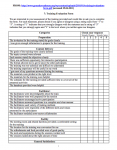
This training evaluation form, developed by ISPCAN within their international training programme ITPI can easily be adapted for own trainings and allow to conduct a comprehensive evaluation of a training, allowing trainers to improve their trainings continuously.
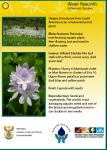
ISPCAN (2008): Training Evaluation Form. Chicago: ISPCAN International Society for the Prevention of Child Abuse and Negelect URL [Visita: 24.04.2011]This factsheet informs the reader about the most common water plants used for floating plant ponds. There are further information on growing and harvesting the plants. It is illustrated with many pictures.
SHARP, D. (n.y): Water plants. South Africa: Water Affairs, Agriculture Forestry and Fisheries, Environmental Affairs URL [Visita: 21.04.2011]The study focussed on the overall performances of lotus and hydrilla systems for post treatment of domestic wastewater. Removal of water quality parameters such as pH, biochemical oxygen demand, suspended substances, nitrogen, phosphorus and total coliform bacteria showed the differences between various plants and control unitas.
KANABKAEW, T. ; PUETPAIBOON, U. (2004): Aquatic plants for domestic wastewater treatment: Lotus (Nelumbo nucifera) and Hydrilla (Hydrilla verticillata) systems. Entradas: Songklanakarin J. Sci. Technology: Volume 26 , 749-756. URL [Visita: 21.04.2011]This article provides general information on the topic of hydroponics. The reader gets to known what this technology is about. Several global key data are given and various examples for implementation are described.
SPIEGELMAN, A. (n.y): Hydroponics 101. Yo, Where’s the dirt?. New York, USA: Annie Spiegelman URL [Visita: 21.04.2011]The article informs the reader about the biological role of aquatic plants in the waters with specific information on the anatomy of aquatic plants and descriptions of different types of plants.
PONGCHAWEE, K. (n.y): Aquatic plants in Aquaculture. India: Aquatic Plants and Ornamental Fish Research Institute URL [Visita: 21.04.2011]This document introduces a recirculating aquaculture-hydroponic system. The system provides an artificial, controlled environment that optimises the growth of aquatic species and soil-less plants, while conserving water resources. In this system, fish and plants are grown in a mutually beneficial, symbiotic relationship.
JOHNSON, M. D. WARDLOW, G. W. (1997): A Prototype Recirculating Aquaculture-Hydroponic System. Arkansas, USA: University of Arkansas, Department of Agricultural & Extension Education URL [Visita: 21.04.2011]This document, rich in pictures, gives a good overview on the history of hydroponics and describes a variety of hydroponic methods and techniques.
DEPARTMENT OF AGRICULTURE SRI LANKA (n.y): Hydroponics. Peradeniya: Sri Lanka: Department of Agriculture URL [Visita: 21.04.2011]Two case studies from Kenya and Ethiopia are briefly presented at the beginning of the document.
RAIN (n.y): A practical guide to Sand Dam Implementation: Water Supply through local Structures as Adaption to Climate Change. Amsterdam: Rainwater Harvesting Implementation Network (RAIN) URL [Visita: 20.04.2011] PDFThis report reflects the results of a research project concerning the hydrology around sand storage dams in the Kitui district, one of the arid and semi-arid lands of Kenya, where most people rely heavily on water supply from the riverbeds of seasonal rivers.
BORST, L. HAAS, S.A. de (2006): Hydrology of Sand Storage Dams. A Case Study in the Kiindu Catchment, Kituï District, Kenya. Amsterdam: Vrije University URL [Visita: 20.04.2011] PDFIn this document Nissen-Petersen criticises sand dams, which failed due to wrong implementation. He promotes a different method of construction, which is presented in this document (see also NISSEN-PETERSEN, training material).
NISSEN-PETERSEN, E. (2011): Sand Dams or Silt Traps. Nairobi: ASAL Consultants Ltd. URL [Visita: 20.04.2011] PDFSustainable Sanitation Practice (SSP) tries to make available high quality information on practical experiences with available sustainable sanitation systems. This issue of the Journal, which is published quarterly, deals with planning tools for sustainable sanitation and dedicates an article to the Planning Tools Section of the SSWM Toolbox.
MUELLEGGER, E. ; LANGENGRABER, G. ; LECHNER, M. (2011): Sustainable Sanitation Practice, Issue 7, 04/2011. Planning Tools. Vienna: EcoSan Club URL [Visita: 20.04.2011]This website provides a short overview over subsurface dam.
This NGO promotes sand dams and explains briefly the features of sand dams.
This brochure highlights the features of sand dams using helpful illustrations.
ED (n.y): Pioneers of Sand Dams. Brentford: EXCELLENT DEVELOPMENT (ED) PDF