This website provides articles, academic articles, course materials and other resources for making use of the Blue Ocean Strategy.

Library
This presentation discusses the theory behind the Blue Ocean Strategy as well as examples and statistics demonstrating successful business development in blue oceans.
ZOHAR, D. (n.y): Blue Ocean Strategy. SIMPLE Management Consulting: URL [Visita: 16.01.2013]This article evaluates a blue ocean strategy canvas for the mineral water industry in Asia. By using the strategy canvas, four actions were identified for companies to come out from red ocean, to make competition irrelevant.
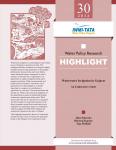
ECO MAX (2012): Blue Ocean Strategy in Asia. Case 2. Eco Max Training and Learning Centre URL [Visita: 16.01.2013]Sewage farming, as it is called by farmers, is the use of untreated or partially treated wastewater for irrigation. This paper explores the prevalance of wastewater use and also the benefits and threats posed by this practice. Wastewater reuse conserves fresh water and nutrients, is inexpensive, and reduces pollution of water systems. The paper brings out several recommendations by farmers to increase the benefits of this system, one of which is planning STPs to maximise the amount of land that can be cultivated.
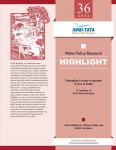
PALRECHA, A. KAPOOR, D. MALLADI, T. (2012): Wastewater irrigation in Gujarat: An exploratory study. (= Water Policy Research Highlight , 30 ). Gujarat, India: IWMI-Tata Water Policy Program URL [Visita: 15.01.2013]The supply of unmetered power to farmers has led to excessive usage and consequently, declining water levels. This paper examines the solutions being implemented by state governments to address the inefficient use of energy and irrigation. It concludes that 'textbook solutions' are not feasible in the current social setting, and recommends negotiable and politically acceptable solutions. This data-rich paper also presents statistics on current groundwater and energy use.
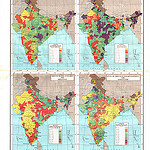
MUKHERJI, A. SHAH, T. GIORDANO, M. (2012): Managing Energy-irrigation Nexus in India. A typology of State interventions. (= Water Policy Research Highlight , 36 ). Gujarat, India: IWMI-Tata Water Policy Program URL [Visita: 15.01.2013]National Atlas and Thematic Mapping Organisation (NATMO)'s land atlas helps to give a high-level and basic picture of land resources in India, and is now available online.
NATMO (1996): Land Resource Atlas of India . Bidhan Nagar, India: National Atlas and Thematic Mapping Organisation URL [Visita: 15.01.2013]This virtual library provides access to recent water and sanitation related publications produced by the United Nations system. This chapter shows the results on the theme "Climate Change".
This virtual library provides access to recent water and sanitation related publications produced by the United Nations system. This chapter shows the results on the theme IWRM.
This virtual library provides access to recent water and sanitation related publications produced by the United Nations system. It is available in English (www.unwaterlibrary.org) and in Spanish (www.bibliotecaonuagua.org) but publications are accessible in different languages when available (including the 6 official UN languages: Arabic, Chinese, English, French, Russian and Spanish).
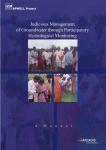
This report developed under the APWELL project deals with participatory hydrological monitoring in an effort to sensitize the individual groundwater users on judicious use of groundwater. Participatory hydrological monitoring improves the users’ understanding of local groundwater resource characteristics and helps local communities to form a community opinion to support appropriate measures for managing the available resources equitably.
APWELL Project (2003): Judicious management of groundwater through participatory hydrological monitoring. A manual. Andhra Pradesh, India.: Andhra Pradesh Groundwater Bore well Irrigation Schemes Project (APWELL Project) URL [Visita: 15.01.2013]This study makes a financial comparison of a parallel sewer based (SB) system with activated sludge, and an FSM system with onsite septic tanks, collection and transport trucks, and drying beds. In addition to costing less overall, FSM operates with a different business model, with costs spread among households, private companies, and the utility. The results of the study illustrate that in low-income countries, vast improvements in sanitation can be affordable when employing FSM, whereas SB systems are prohibitively expensive.
DODANE, P.H. ; MBEGUERE, M ; SOW, O. ; STRANDE, L. (2012): Capital and Operating Costs of Full-Scale Fecal Sludge Management and Wastewater Treatment Systems in Dakar, Senegal . Entradas: Environmental Science & Technology: Volume 46 , 3705. URL [Visita: 15.01.2013]Most discussions around 'water scarcity' fail to highlight that this scarcity is skewed towards those who are vulnerable in terms of caste, gender, class, location. This paper analyses the social composition of 'scarcity' and the conflicts that arise from it. It emphasises that the various domains that the water sector is composed of (such as the household, the village etc) are non-homogenous and have potential for both conflict and cooperation. This reality shapes the phenomenon of water scarcity and needs to be understood.
BHAT, S. POMANE, R. KULKARNI, S. (2012): Addressing Social and Gender Equity in the Water Sector. (= Water Policy Research Highlight , 22 ). Gujarat, India: IWMI-Tata Water Policy Program URL [Visita: 15.01.2013]Drought is stressful for all, but some sections of society are more vulnerable than others. This paper takes a look at how gender inequities are worsened by lack of food security. It also points out that despite women's active participation in land and water based activities, they rarely are involved in decision making or ownership. It suggests policy changes that may enhance womens access and resources.
SAHU, B. (2012): Gender equity, water and food security in drought prone areas. A case study of Odisha and Gujarat. (= Water Policy Research Highlight , 28 ). Gujarat, India: IWMI-Tata Water Policy Program URL [Visita: 15.01.2013]In 2012, the Rajasthan government initiated a 86% subsidy for installing irrigation pumps the run on solar energy. This was designed for selected districts with a predetermined quota. This paper examines the method of administering subsidy, the demand for pumps and administrative issues including determining eligivility of both farmers and supply firms, and the logistics of delivering these pumps.The performance of these pumps, as also the other incidental benefits to farmers are discussed in detail. The paper remarks on the use of these pumps to draw groundwater rather than water from surface ponds. It recommends that drip irrigation be made a pre-requisite for subsidy in order to minimize its impact on the already-stressed groundwater in Rajasthan.
TEWARI, N.P. (2012): Solar irrigation pumps: The Rajasthan experience. (= Water Policy Research Highlight , 35 ). Gujarat, India: IWMI-Tata Water Policy Program URL [Visita: 15.01.2013]Despite its proven benefits, micro-irrigation has been slow to realise its potential in India. Following the recommendations of the Micro-irrigation task force in 2004, a tiered set of subsidies was put into place for micro-irrigation. The models set up in Andhra Pradesh and Gujarat have been considered the most successful. This paper compares these two models using several parameters and comes up with a set of recommendations for replication elsewhere.
PULLABHOTLA, H.K. KUMAR, C. VERMA, S. (2009): Micro-irrigation Subsidies in Gujarat and Andhra Pradesh. Implications for market dynamics and growth. (= Water Policy Research Highlight , 43 ). Gujarat, India: IWMI-Tata Water Policy Program URL [Visita: 15.01.2013]National Atlas and Thematic Mapping Organisation (NATMO)'s water atlas helps to give a high-level and basic picture of water resources in India, and is now available online.
NATMO (1996): Water Resource Atlas of India. Bidhan Nagar, India: National Atlas and Thematic Mapping Organisation URL [Visita: 15.01.2013]This virtual library provides access to recent water and sanitation related publications produced by the United Nations system. This chapter shows the results on the theme "Gender and Water".
This virtual library provides access to recent water and sanitation related publications produced by the United Nations system. This chapter shows the results on the theme "Human right to water and sanitation".
This Manual aims to serve as a practical guide for the selection of sanitation technology options to satisfy local desires and meet national needs in Afghanistan. It is useful for the professionals and organisations working to address fecal contamination across Afghanistan.
USAID Afghanistan (2010): Latrine and Sanitation Options Manual. Sustainable Water Supply and Sanitation (SWSS) Project. Kabul: USAID Afghanistan URL [Visita: 15.01.2013]A number of possibilities exist for using fecal sludge beneficially. Data provided by Water Services Authorities indicate that most pits are filling in five to nine years. This suggests that of the more than a million ventilated improved pit latrines that have been built in the past decade many will soon reach capacity. Studies of pit filling rates across a number of communities indicate that pits generally fill at a rate of 40 liters per capita annum, with 60 liters per capita annum providing a safe margin for planning pit design and emptying programs (Link-download is free but registration required).
STILL, D. FOXON, K. (2012): How fast do pit toilets fill up? A scientific understanding of sludge build up and accumulation in pit latrines. (= Tackling the Challenges of Full Pit Latrines , 2 ). Gezina, South Africa: Water Research Commission URL [Visita: 15.01.2013]