
This publication incorporates key findings from the UNEP Global Environment Outlook (GEO-5) in order to equip young readers with the latest science-based information on the current state of the global environment, including water, climate change, air quality, biodiversity, land use, and other areas. Chapter 5 focuses on water issues and suggests different ways youth can make a difference.
UNEP (2013): TUNZA Acting for a Better World: GEO-5 for Youth. Nairobi: UNEP URL [Visita: 08.04.2013]Library
This thematic paper examines the historic and ongoing development of water lifting technologies and the governance problems and solutions that have arisen from controlled or uncontrolled groundwater abstraction. It also examines legislation to improved pump efficiency and the economics and life cycle costing of borehole pumps.
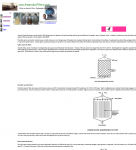
FAO GEF IAH IHP World Bank (2012): Social adoption of groundwater pumping technology and the development of groundwater cultures. Governance at the point of abstraction. FAO URL [Visita: 08.04.2013] PDFAnaerobic fixed-film reactors were developed in 1968 and have grown to represent an advanced technology that has been used effectively for treating a variety of industrial wastes. A number of variations have been developed in the intervening years including the fully packed upflow anaerobic filter (AF) , the fully packed downflow anaerobic filter and the upflow hybrid anaerobic filter (HAF).
IRWIN, T. (n.y): A Primer on Anaerobic Filters. Fundamentals and Applications. n/a: Engineering Fundamentals URL [Visita: 08.04.2013]This handbook is one third of a water safety plan (WSP) training package. It accompanies the WSP training workbook and WSP training PowerPoint presentations. The handbook is designed to be used by professional and non-professional trainers, who should have prior knowledge and understanding of WSPs, and who are facilitating WSP training based on the 2009 WSP manual of the International Water Association (IWA) and the World Health Organization (WHO). The training is targeted at all professionals involved in the management of drinking-water safety
WHO IWA (2012): Water Safety Plans - Training package. Facilitator handbook. WHO URL [Visita: 08.04.2013]At the start of 2013, International Year of Water Cooperation, the February issue of Tunza magazine, the UNEP magazine for youth, focuses on freshwater issues.
UNEP (2013): TUNZA magazine: Freshwater. Nairobi: UNEP URL [Visita: 08.04.2013]The purpose of this Thematic Paper is to review the trends in groundwater quality and pollution, taking into account the physical, environmental, institutional and social actors involved in groundwater quality governance. The final goal is to diagnose historical and current issues related to groundwater use under the threat of pollution, and to identify prospects for improved and sustainable aquifer governance through prevention and mitigation of the factors that may impact water quality.
FAO GEF IAH IHP World Bank (2012): Trends in groundwater pollution: loss of groundwater quality and related aquifers services. FAO URL [Visita: 08.04.2013]This paper draws attention to case studies from a range of hydro-geological, climatic and societal settings where innovative management has been successful in reversing groundwater storage declines (or increases). Informing and engaging stakeholders in governance has resulted in more resilient outcomes that take better account of local needs. Importantly, in many settings local action by motivated communities has run ahead of state and national policies and been highly effective in managing groundwater storage, increasing farm incomes and protecting the environment.
FAO GEF IAH IHP World Bank (2012): Management of aquifer recharge and discharge processes and aquifer storage equilibrium. Food and Agriculture Organization (FAO) URL [Visita: 08.04.2013]En esta página se pueden encontrar algunos documentos relacionados con árbol de problemas, árbol de objetivos y análisis estratégico.
En este video se explica paso a paso claramente la forma de construir un árbol de problemas, el caso de estudio es sobre un centro educativo.
Este es un amplio manual sobre proyectos, sin embargo en las páginas 10 a 27 se explica específicamente el árbol de problemas, de objetivos y el análisis de alternativas.
ORTEGÓN, E. ; PACHECO, F. ; ROURA, H. (2005): Metodología General de Identificación, Preparación y Evaluación de Proyectos de Inversión Pública. Entradas: Serie Manuales : Volume 39 , 10-27. URL [Visita: 04.04.2013]Language: Spanish
En este documento se explica claramente el análisis de problemas y de objetivos.
SECRETARÍA TÉCNICA DE PLANIFICACIÓN (n.y): El Árbol De Problemas. Uruguay URL [Visita: 02.04.2013]Language: Spanish
It describes the objectives and functioning of a leakage control programme. The objectives of a Leak detection Programme (LRP) are: i. To reduce physical water losses through proactive visible-leak search campaigns and pressure regulation in all zones; ii. To reduce physical losses through prompt leak repairs in the entire water supply system / network.
UN-HABITAT (2013): Leakage Control Manual. (= Utility Management Series of Small Towns , 5 ). Nairobi: UN-HABITAT URL [Visita: 02.04.2013]Whereas day to day management of groundwater resources takes place within the national sphere, and often at local level, domestic regulatory systems cannot be seen in isolation from international legal frameworks when transboundary aquifers are concerned. In that case international law determines states¿ rights and obligations to which domestic law has to be made compatible. The legal framework for groundwater management should provide answers to key questions such as, who can access groundwater, where, for which purposes and under which conditions? How are aquifers protected against depletion and pollution? According to which criteria are the finite resources of non-recharging aquifers to be allocated and protected? Which kind of monitoring and planning tools have to be used? How will private and public interest be balanced and how get stakeholders involved in decision making and management processes? These are some of the questions this report tries to respond.
FAO GEF IAH IHP World Bank (2012): Legal and institutional frameworks. FAO URL [Visita: 02.04.2013]This document synthesizes the 12 thematic papers and case studies prepared by the Groundwater Governance project in an effort to review the global situation of groundwater governance and develop of a Global Groundwater Diagnostic. This diagnostic presents current knowledge and experience concerning key economic, policy, institutional, environmental and technical aspects of groundwater management, and addresses emerging issues and innovative approaches.
FAO GEF IAH IHP World Bank (2012): Groundwater Governance. Synthesis of Thematic Papers/Case Studies. Preparing the ground for Regional Consultations and Global Diagnostic Report. FAO URL [Visita: 28.03.2013]This manual is part of a Utility Management Series for Small Towns. Water Utilities’ Customer Service is one of the key commercial functions in any Utility. The responsibility of customer service unit lies with the Head of the Commercial department who is the overall supervisor of the customer service activities. The Lake Victoria Region Water and Sanitation Initiative has provided many useful lessons on the importance of a customer service unit in an organizational structural set-up, the appropriate office set-up framework for customer service, and the staffing as it is used as an example. This manual also provides comprehensive guiding principles governing customer service along with the attendant codes of practice and procedures for effective customer service. Finally it outlines strategies of how to implement Customer service policy
UN-HABITAT (2013): Customer Services User manual. Nairobi: UN-HABITAT URL [Visita: 28.03.2013]This paper explores the reasons underpinning the apparent poor approach to full integration in the management and use of both water sources, and the absence of more coordinated planning. This paper is intended to provide insight into these barriers to adoption and hence provide a new focus on an old paradigm; a focus intended to make progress with the objective of improved water management and water use efficiency and so support longer term outcomes in the form of improved food security in critical parts of the world.
FAO GEF IAH IHP Worldbank (2012): Conjunctive use and management of groundwater and surface water. Australia: Sinclair Knight Merz URL [Visita: 28.03.2013] PDFThis second edition of the Asian Water Development Outlook (AWDO) provides a quantitative and comprehensive view of water security in the countries of Asia and the Pacific. By focusing on critical water issues, AWDO 2013 provides finance and planning leaders with recommendations on policy actions to improve water governance and guidance on investments to increase their country's water security
ADB (2013): Asian Water Development Outlook 2013. Measuring Water Security in Asia and the Pacific. Manila: Asian Development Bank (ADB) URL [Visita: 28.03.2013]