The Parivartan programme, launched by the Ahmedabad Municipal Corporation, aims to mobilise local residents and secure a commitment to the financing and maintenance of water supply, sewerage and drainage infrastructure in slum settlements through a combination of municipal, community and private investment.
CHATURVEDULA, S. SADHUKHAN, B. (2012): Ahmedabad Parivartan Programme. ICLEI – Local Governments for Sustainability - South Asia. URL [Visita: 28.05.2013]Library
Recognising the many issues associated with inadequate sanitation, in the 1980s the Lesotho government launched a large scale sanitation improvement programme based on the installation of VIP latrines. The programme was successful in increasing improved sanitation coverage in urban areas by up to 80% over the course of 20 years by relying on creating demand for among communities rather than supporting implementation through subsidies.
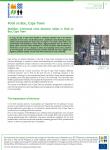
QUAYLE, T. (2012): Lesotho. Low Cost Sanitation Provision in Urban Areas in Lesotho. A Model for Improved Sanitation Coverage. Cape Town: ICLEI Africa URL [Visita: 28.05.2013]The installation of an innovative MobiSan communal sanitation unit in the informal settlement of Pook se Bos in Cape Town, South Africa, has demonstrated how such decentralised solutions can be ideal for informal settlements where the water table is high and, due to land ownership issues, the municipality has limited ability to provide formal sanitation services.
QUAYLE, T. (2012): Pook se Bos, Cape Town. MobiSan: Communal Urine Diversion Toilets in Pook se Bos, Cape Town. Cape Town: ICLEI Africa URL [Visita: 28.05.2013]In a unique case of awareness raising for sanitation, the use of traditional songs by local musicians has proved to be a powerful marketing tool in Mozambique resulting in rapid upscaling and acceptance of ecosan by urban, peri-urban and rural communities. The case study highlights the value of tailor-made and locally adaptable methodology to ensure the success and self-replication of integrated water, sanitation and hygiene programme.
QUAYLE, T. (2012): Lichinga, Mozambique. Innovative Marketing: Removing the Barriers to Ecological Sanitation in Lichinga, Niassa Province, Mozambiqze. Cape Town: ICLEI Africa URL [Visita: 28.05.2013]En este sitio web se presenta información sobre la fundación SODIS, que se inició por el descubrimiento del profesor Aftim Acra de la Universidad Americana en Beirut (Líbano), al exponer agua al sol, el número de microorganismos disminuye. Se exponen soluciones simples para el tratamiento de agua, proyectos, entre otros.
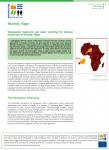
Combining wastewater treatment with water recycling and biomass production has been shown to be a viable alternative to traditional wastewater treatment systems in peri-urban areas. Research in Niamey, Niger, indicates that the introduction of plant species such as duckweed to stabilisation ponds provides improved water quality as well as additional income generation through the harvesting of biomass for animal feed.
QUAYLE, T. (2012): Niamey, Niger. Wastewater Treatment and Water Recycling for Biomass Production in Niamey, Niger. Cape Town: ICLEI Africa URL [Visita: 28.05.2013]Un grupo de videos bastante didácticos sobre el tratamiento de agua doméstico a través del uso de energía solar.
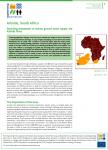
The satellite town of Atlantis, South Africa has a long history of recharging its storm water and treated wastewater into its sandy soils as a means of augmenting its limited water supplies. Such has been the success of these cost-effective artificial recharge solutions that they are being replicated elsewhere within southern Africa where water resources are scarce.
QUAYLE, T. (2012): Atlantis, South Africa. Recycling Wastewater to Bolster Ground Water Supply:The Atlantis Story. Cape Town: ICLEI Africa URL [Visita: 28.05.2013]En esta presentación se evidencia un estudio de la situación de los aspectos de agua potable y saneamiento, los problemas de salud que se relacionan con estos, se presentan también los beneficios que se pueden obtener por la intervención en la mejora de estos servicios empezando desde el hogar.
PAHO (2005): Tratamiento y Almacenamiento Seguro de Agua en el Domicilio. En: Simposio Regional Sobre Vivienda Saludable Reto del Milenio en los asentamientos precarios de América Latina y el Caribe. Lima URL [Visita: 28.05.2013]Language: Spanish
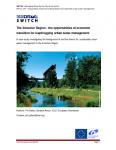
Case study illustrating why the Emscher Region has been able to promote and implement sustainable solutions in its urban water management practices with such a high level of success. Based on a review of literature and expert interviews, the study describes the historic and current perspectives that have influenced the adoption of sustainable water management in the region.
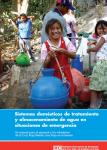
SALIAN, P. ANTON, B. (2011): The Emscher Region.The Opportunities of Economic Transition for Leapfrogging Urban Water Management. Freiburg: ICLEI European Secretariat GmbH URL [Visita: 28.05.2013]En este documento se presentan diferentes métodos domésticos de tratamiento de agua de manera sencilla con muchos gráficos lo que puede ser utilizado como un material didáctico para sensibilizar a la población.
IFRC (2008): Sistemas Domésticos de Tratamiento y Almacenamiento de Agua en Situaciones de Emergencia. Ginebra: Federación Internacional de Sociedades de la Cruz Roja y de la Media Luna Roja URL [Visita: 28.05.2013]Language: Spanish
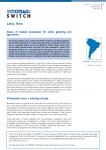
Lima’s wastewater has a strong potential for reuse given Lima’s context of water scarcity and its citizens’ need for green spaces and peri-urban agriculture. Lima has worked with stakeholders to influence national legislation on wastewater reuse and to develop a demonstration project: a multifunctional city park using treated wastewater.
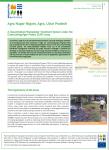
LOFTUS, A.C. (2011): Lima, Peru. Reuse of Treated Wastewater for Urban Greening and Agriculture. Freiburg: ICLEI European Secretariat GmbH URL [Visita: 28.05.2013]The Crosscutting Agra Program (CAP) was launched with the aim of improving wastewater services in the city of Agra and promoting economic growth. The multi-stakeholder initiative has made use of decentralised wastewater management technology and public education campaigns to eliminate the discharge of untreated wastewater and discourage unsanitary behaviour among the local population.
SADHUKHAN, B. THAKUR, R. CHATURVEDULA, S. (2012): Agra Nagar Nigam, Agra, Uttar Pradesh. A Decentralized Wastewater Treatment System under the Crosscutting Agra Project (CAP) 2009. Quezon City: ICLEI South Asia URL [Visita: 28.05.2013]El presente documento establece, por primera vez criterios globales que permiten a los usuarios evaluar si un método de tratamiento doméstico del agua (TDA) reduce la carga de patógenos del agua lo suficiente para proteger la salud. Por medio de un marco basado en los riesgos y haciendo hincapié en la filosofía de la mejora gradual, se pretende proporcionar a los ejecutores y planificadores de políticas un enfoque científico y pragmático para seleccionar métodos adecuados a las condiciones de cada lugar.
OMS (2012): Evaluación de Métodos para el Tratamiento Doméstico del Agua. Metas sanitarias y especificaciones de eficiencia microbiológica. Ginebra: Organización Mundial de la Salud URL [Visita: 28.05.2013]Language: Spanish
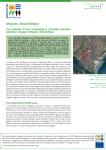
In the Nlhamankulo Urban District in Mozambique, neighbourhood leaders utilised monitoring at the community level as a powerful tool to mobilise householders in informal settlements to upgrade and improve the cleanliness of their self-built latrines. The methodology used provides an entry point for sanitation upgrading as it is pro-poor, cost effective, based on existing structures and mainstreams the need for improved water, sanitation and hygiene facilities and practices.
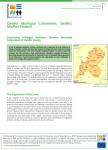
HAWKINS, P. MUXIMPUA, O. (2011): Maputo, Mozambique. The Potential of Local Monitoring to Stimulate Sanitation Behaviour Change. WSP-Mozambique URL [Visita: 28.05.2013]Environmental sanitation campaign initiated by the Municipal Corporation of Gwailor which focuses on generating demand among residents for improved access to sanitation, raising awareness on the importance of good sanitary behaviour and capacitating the local community to finance and manage safe sanitation systems.
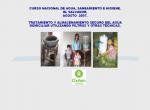
SADHUKHAN, B. THAKUR, R. CHATURVEDULA, S. (2012): Gwalior Municipal Corporation, Gwalior, Madhya Pradesh. Community Managed Sanitation Scheme, Municipal Corporation of Gwalior (2005). Quezon City: ICLEI South Asia URL [Visita: 28.05.2013]Esta presentación presenta de forma resumida casos en los que se utilizan filtros para el tratamiento y almacenamiento seguro de agua.
OXFAM (2007): Tratamiento y Almacenamiento Seguro del Agua Domiciliar Utilizando Filtros y Otras Técnicas. En: Curso Nacional del Agua, Saneamiento e Higiene. El Salvador URL [Visita: 27.05.2013]Language: Spanish
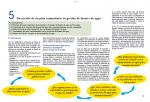
En esta página se puede encontrar el estudio completo desarrollado por HOSLY & WITTEN Inc en el 2001, sobre la Protección de Agua. Manual de Capacitación para Comunidades. Nicaragua: Agencia para el Desarrollo Internacional (USAID), Agencia de Protección Ambiental (EPA).
Este estudio contiene el capítulo: “desarrollo de un plan comunitario de gestión de fuentes de agua”, en donde se hace una revisión del marco legal, se evalúa la situación actual del manejo de agua, se elabora un plan consensual para el manejo de fuentes de agua, se documenta el tratamiento de agua en conjunto con la protección de fuentes de agua y se plantea un manejo local de los sistemas de abastecimiento de agua.
HOSLY ; WITTEN, Inc. (2001): Protección de Agua. Manual de Capacitación para Comunidades. Nicaragua: Agencia para el Desarrollo Internacional (USAID), Agencia de Protección Ambiental (EPA) URL [Visita: 23.05.2013]Language: Spanish
La Caja de Herramientas Comunitarias, desarrollada por el Grupo de Trabajo de la Universidad de Kansas.(KUWG), es el recurso más amplio del mundo con información gratuita acerca de las habilidades esenciales para construir comunidades más sanas. Ofrece más de 7.000 páginas de guía práctica en la creación de cambio y mejora comunitaria, y está creciendo como un recurso global para este trabajo.