
Library
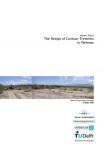
Master thesis showing scenarios of probable impacts, water flow and additional storage of a contour trench. It further includes recommendations on measurements, and how to attain the best result when implementing a contour trench.
PRAMANA, K.E.R. (2007): The Design of Contour Trenches in Vietnam. (= Master Thesis ). Delft: Delft University of Technology (TUDelft) URL [Visita: 13.03.2019] PDF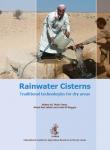
Rainwater cisterns are indigenous underground water storage structures, widely used in the Matrouh area in north-western Egypt, in steppe areas in Syria and Jordan, and elsewhere. Little information is available on the design, construction and operation of traditional cisterns. Most available publications on water cisterns deal with rooftop water harvesting, using pre-fabricated materials. These cisterns are of very limited capacity (a few cubic meters) and are more expensive than underground cisterns. Most publications on rainwater harvesting are written for water professionals and researchers, not for local users and development practitioners. This publication responds to the needs expressed by water users, and especially ICARDA’s research and development partners. It will also be useful to policy makers responsible for water development in dry areas.
ALI, A., OWEIS, T., SALKINI, A.B. and EL-NAGGAR, S. (2009): Rainwater Cisterns. Traditional Technologies for Dry Areas. Aleppo: International Center for Agricultural Research in the Dry Areas (ICARDA) URL [Visita: 13.03.2019] PDF
This paper is a review of simple water harvesting techniques, which have been tested and found useful in arid and semi-arid regions, and which might be suitable for use in other areas. The paper also tries to show some successful cases of application of water harvesting techniques in African countries, which have increased the overall productivity of smallholder farms and hence improved farmers’ livelihood.
IBRAIMO, N. MUNGUAMBE, P. (2007): Rainwater Harvesting Technologies for Small Scale Rainfed Agriculture in Arid and Semi-arid Areas. Maputo: University Eduardo Mondlane URL [Visita: 13.03.2019] PDF
This handbook highlights the principles and technologies that can be used to harness the huge untapped potential of rainwater. Instead of a stereotyped view focusing only on rivers and groundwater, the book directs readers in recognising rain as the ultimate source of water for food production and other uses in rural economies across Africa.
MALESU, M.M. ; ODUOR, A.R. ; ODHIAMBO, O.J. (2007): Green Water Management Handbook. Rainwater Harvesting for Agricultural Production and Ecological Sustainability. Nairobi: The World Agroforestry Centre URL [Visita: 13.03.2019] PDF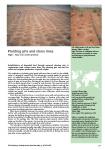
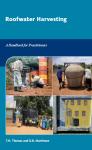
This handbook has been written to assist NGO and government staff responsible for implementing domestic roofwater harvesting systems or programmes. It can be used to design single roofwater harvesting systems. The handbook focuses primarily on low-cost DRWH in the ‘humid tropics’ (areas close to the Equator with average rainfall over 800 mm).
THOMAS, T.H. MARTINSON, D.B. (2007): Roofwater Harvesting: A Handbook for Practitioners. Delft: IRC International Water and Sanitation Centre URL [Visita: 12.03.2019] PDF
This document provides general guidance on the collection, care and storage of rainwater in domestic tanks. It is written especially for the Australian state, but is adaptable for other countries too.
ENHEALTH (2004): Guidance on the Use of Rainwater Tanks. Canberra: Environmental Health Committee (enHealth) URL [Visita: 12.03.2019] PDF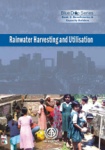
The Blue Drop Series on Water Harvesting and Utilisation is divided into three and each one has a specific target group- policy makers, beneficiaries and capacity and implementing agencies. The publications give an overview of the concept of rainwater and have a focus on the legal and administrative framework for rainwater harvesting. Book 2: Beneficiaries & Capacity.
UN-HABITAT (2005): Rainwater Harvesting and Utilisation. Blue Drop Series, Book 2: Beneficiaries & Capacity. Nairobi: UN-Habitat URL [Visita: 12.03.2019] PDF
This paper describes a case study of a house in Kathmandu where rainwater is used for all purposes including drinking, greywater is recycled for non drinkable purposes and human excreta is utilized as a fertilizer by adopting ecological sanitation technique.
SHRESTHA, R.R. (2010): Eco Home for Sustainable Water Management- A Case Study in Kathmandu. Kathmandu: United Nation Development Program (UNDP) URL [Visita: 12.03.2019] PDF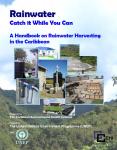
This handbook serves as a practical guideline featuring best practice for RWH in small island Caribbean environments. It covers the most important topics on RTRWH using helpful illustrations and pictures.
CEHI (2009): Caribbean Rainwater Harvesting Handbook. Castries: Caribbean Environmental Health Institute (CEHI) URL [Visita: 12.03.2019] PDF
This booklet explains how to collect, store and purify rainwater for direct use at household level. It is a practical guide to creating a rainwater harvesting infrastructure from design to implementation that is illustrated with pictures, tables and examples.
HATUM, T. WORM, J. (2006): Rainwater Harvesting for Domestic Use. Wageningen: Agrosima and CTA URL [Visita: 12.03.2019] PDF
Water harvesting has been practiced successfully for millennia in parts of the world – and some recent interventions have also had significant local impact. Yet water harvesting’s potential remains largely unknown, unacknowledged and unappreciated. These guidelines cover a wide span of technologies from large-scale floodwater spreading to practices that collect and store water from household compounds.
MEKDASCHI STUDER, R. LINIGER, H. (2013): Water Harvesting. Guidelines to Good Practice. Bern/Amsterdam/Wageningen/Rome: Centre for Development and Environment (CDE), Rainwater Harvesting Implementation Network (RAIN), MetaMeta, The International Fund for Agricultural Development (IFAD) URL [Visita: 12.03.2019] PDF
This booklet on smart water harvesting describes a number of creative solutions in situations where there seems to be no water. It shows practical efforts to "create water", especially in drought prone areas. It does not limit itself to the act of harvesting, but includes capturing water during periods of rain, so that it is available for periods of drought. The book is an effective source of inspiration for local communities, civil engineers, NGOs, research institutes, donors and governments.
NWP (2007): Smart Water Harvesting Solutions . Examples of innovative low-cost technologies for rain, fog, runoff water and groundwater. (= Smart water solutions ). Amsterdam: KIT Publishers URL [Visita: 12.03.2019] PDFThis website provides a brief overview on the most important topics of rainwater harvesting.