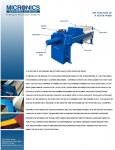
How does a chamber filter press work? This is described in a few sentences in this flyer.
MICRONICS (n.y): Function of a Filter Press. Portsmouth: Micronics Engineered Filtration URL [Visita: 24.11.2011]Perspectives are different frameworks from which to explore the knowledge around sustainable sanitation and water management. Perspectives are like filters: they compile and structure the information that relate to a given focus theme, region or context. This allows you to quickly navigate to the content of your particular interest while promoting the holistic understanding of sustainable sanitation and water management.

How does a chamber filter press work? This is described in a few sentences in this flyer.
MICRONICS (n.y): Function of a Filter Press. Portsmouth: Micronics Engineered Filtration URL [Visita: 24.11.2011]
The filter press is one of the oldest mechanical dewatering devices. Read more about it in this document.
DELTREIL, J.P. (2003): Mechanical Dewatering Using Filter Presses Technology. Limoges: Faure Equipment SA. [Accessed: 24.11.2011] PDF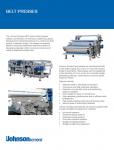
This flyer describes the most important aspects and provides pictures of the Johnson belt filter press systems.
JOHNSONSCREENS (2011): Belt Press. New Brighton: Johnson Screen Inc. [Accessed: 24.11.2011] PDF
This pdf-presentation shows the bioreactor landfill demo-project and the future direction of these landfills.
REINHART, D. (n.y): Bioreactor Design & Operation; Demonstration Projects, Results & Future Directions. Orlando: University of Central Florida URL [Visita: 16.11.2011]
This brochure was prepared to share the vision of WASTE MANAGEMENT of the future of landfill management and to describe their steps to realise this vision.
WM (2004): The Bioreactor Landfill. Cincinnati: Waste Management (WM) Bioreactor Programm URL [Visita: 16.11.2011]
This is a pdf-presentation about landfill cover, operation and design.
GROSS, B.A. (n.y): Landfill Cover, Design and Operation. U.S.A.: GeoSyntec Consultants URL [Visita: 16.11.2011]
This paper presents the results of the analyses of the wastewater quantities and constituents from the Centar Župa municipality and leachate quantities and leachate composition, mass loading from the wastewater and also from the leachate. Total wastewater quantities and total wastewater flow pollutant concentrations have been calculated. Results of the calculations of the wastewater treatment structures are presented in the paper.
PELIVANOSKI, P. DONEVSKA, K. SOFRONIEVSKA. D. (2009): Wastewater and Landfill Leachate Treatment Plant for the Municipality of Centar Župa. Ohrid: International Symposium on Water Management and Hydraulic Engineering. [Accessed: 06.11.2011] PDF
This Bioreactors Landfill Technical/Regulatory Guidance Document is primarily written for decision makers associated with the planning, development, review, and implementation of bioreactor landfills. The decision makers include, at a minimum, regulators, owners/operators, and consultants. This document focuses on the decisions related to design, evaluation, construction, and monitoring associated with bioreactor landfills.
ITRC (2006): Characterisation, Design, Construction, and Monitoring of Bioreactor Landfills. Technical/Regulatory Guideline. Washington, DC: Interstate Technology & Regulatory Council URL [Visita: 16.11.2011]
Disposal sites, the final links in the waste handling chain, are usually transfer stations and sanitary landfills. This document contains a general description, as well as siting and operation advices and a description of the different designs and types of landfills.
GOVERNMENT ENGINEERING (2006): Landfill Design and Operation. Entradas: Government Engineering – The Journal for Public Infrastructure: , 38-42. PDFThis website of SANDEC, the Department of Water and Sanitation in developing Countries at the Swiss Federal Institute of Aquatic Science and Technology (EAWAG) provides more information on the CLUES approach. On this site you find a more interactive version of the guidelines, tool updates, interesting links as well as news on CLUES projects from all over the world.
This article discusses the effect of hydrogen peroxide (added to an advanced treatment plant) on wastewater quality from petrochemical industry.
SONJI ADEYINKA, J. ; RIM-RUKEH, A. (1998): Effect of Hydrogen Peroxide on Industrial Wastewater effluents. Entradas: EnvironmentalMonitoring an Assessment: Volume 59 , 249-256. URL [Visita: 15.11.2011]
World population growth and changing consumption patterns, along with limited capacity to expand arable land and pasture, require the intensification of agriculture. There is much potential for such intensification in developing countries: the soils are often nutrient-poor as a result of both natural conditions (climate, geology) and human activity, while at the same time use of external inputs is limited. One way of improving land productivity is to provide better plant nutrition, for which both organic and inorganic fertilisers are available options.
GIZ (2010): Resource-Saving Fertiliser Use. Eschborn: German Agency for International Cooperation (GIZ). [Accessed: 15.11.2011] PDF
The batch removal of heavy metals lead (Pb), zinc (Zn) and copper (Cu) from industrial wastewater effluent using hydrogen peroxide is described in this case study.
BADMUS, M.A.O. ; AUDU, T.O.K. ; ANYATA, B.U. (2007): Removal of Heavy Metal from Industrial Wastewater using Hydrogen Peroxide. Entradas: African Journal of Biotechnology : Volume 6 , 238-242. URL [Visita: 15.11.2011]
This article (in German) describes a constructed wetland system with a compost filter as a first treatment step.
BALLY, A. ; BITTNER, K. (2009): Pflanzenkläranlagen – Die oekologische Alternative zur technischen Kleinkläranlage. Entradas: Fachzeitschrift "Verein für Ingenieurbiologie": Volume 4 , 80-85. URL [Visita: 14.11.2011]
This article (in German) describes a constructed wetland system with a compost filter as a first treatment step.
BALLY, A. ; BITTNER, K. (2009): Pflanzenklaranlagen – Die okologische Alternative zur technischen Kleinklaranlage. Entradas: Fachzeitschrift “Verein für Ingenieurbiologie" 4/09: , 80-85. URL [Visita: 14.11.2011]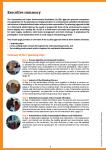
This two-page document provides an overview of the CLUES approach with its three distinct elements: 7 planning steps, 3 cross-cutting tasks relevant throughout the entire planning process, and the enabling environment which is required for sustainable interventions.
LUETHI, C. MOREL, A. TILLEY, E. ULRICH, L. (2011): Community-Led Urban Environmental Sanitation Planning (CLUES). Executive Summary. Dubendorf: Swiss Federal Institute of Aquatic Science and Technology (Eawag). [Accessed: 12.11.2011] PDF
This document presents several methods for the removal of fluoride from water in small communities. One section is dedicated to bone char as a defluoridating material.
SMET, J. ; WIJK, C. van (2002): Small Community Water supplies: Technologies for Fluorine Removal - Chapter 22. Entradas: SamSam Water Library: URL [Visita: 08.11.2011]
This paper provides analysis and explanation of the major challenges and trends in integrated water resources management (IWRM), successful examples of where practical approaches to IWRM generated good solutions to water and sanitation (WATSAN) problems, and also links to further sources of information, tools and approaches that can be used by WATSAN professionals in their work.
MORIARTY, P. BUTTERWORTH, J. BATCHELOR, C. (2004): Integrated Water Resources Management. And the domestic water and sanitation sub-sector. (= Tematic Overview Paper (TOP) ). Delft: International Water and Sanitation Centre (IRC) URL [Visita: 07.11.2011]