This series of articles proposes a general overview of many aspects related to ion exchange for residential water treatment. Among other, historic aspects, manufacturing process, softening process, technical aspects, applications in toxic metallic ions removal are covered.
KELLER, M.C. (2005): Basic Ion Exchange for Residential Water Treatment Part 3. Entradas: Water Conditioning and Purification. [Accessed: 27.02.2012]: PDFLibrary
Gender in Water and Sanitation highlights in brief form, approaches to redressing gender inequality in the water and sanitation sector. It is a working paper as the Water and Sanitation Program and its partners continue to explore and document emerging practice from the field. The review is intended for easy reference by sector ministries, donors, citizens, development banks, non-governmental organizations and water and sanitation service providers committed to mainstreaming gender in the sector.
WSP (2012): Gender in Water and Sanitation. Washington, D.C: Water and Sanitation Program (WSP) URL [Visita: 27.02.2012]This fact sheet summarises aspects related to ion exchange to soften water with an emphasis on reduction of salt usage.
NHDES (2009): Ion Exchange Treatment of Drinking Water . New Hampshire: New Hampshire Department of Environmental Services (NHDES) URL [Visita: 27.02.2012]The following case studies highlight some outstanding stormwater education projects and initiatives.
This year (2012), the World Bank/Water and Sanitation Program’s calendar depicts water and sanitation challenges from a gender perspective to call attention to some of the social norms that result from, and reinforce poor service quality.
WSP (2012): Calendar 2012: Focusing Attention on the Critical Role of Gender in Water and Sanitation. Washington, D.C: Water and Sanitation Program (WSP) URL [Visita: 27.02.2012]This presentation describes different aspects of ion exchange technology such as physical process, application, and theory.
ARMENANTE, P.M. (n.y): Ion Exchange. Entradas: New Jersey Institute of Technology. [Accessed: 27.02.2012]: PDFThis case study is about the removal of chromium from groundwater by means of ion exchange resin.
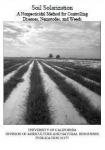
BAHOWICK, S. ; DOBIE, D. ; KUMAMOTO, G. (1993): Ion Exchange Resin for Removing Hexavalent Chromium from Ground Water at Treatment Facility C: Data on Removal Capacity, Regeneration Efficiency, and Operation. Entradas: Environmental Restoration Division, Lawrence Livermore National Laboratory. [Accessed: 27.02.2012]: PDFSoil borne pests can be controlled in vegetable and fruit crops by preplant application of pesticides, including the fumigants methyl bromide, chloropicrin, and metam sodium. The use of these materials, however, is often undesirable due to their toxicity to animals and people, their residual toxicity in plants and soils, the complexity of soil treatment, and their high cost. Furthermore, restrictions on the use of soil-applied pesticides seem imminent as existing environmental legislation is implemented. As a result, there has been an increased emphasis on reduced-pesticide or non-pesticidal control methods. Soil solarisation is a non-pesticidal method of controlling soil borne pests by placing plastic sheets on moist soil during periods of high ambient temperature. The plastic sheets allow the sun's radiant energy to be trapped in the soil, heating the upper levels. Solarisation during the hot summer months can increase soil temperature to levels that kill many disease-causing organisms (pathogens), nematodes, and weed seed and seedlings. It leaves no toxic residues and can be easily used on a small or large scale. Soil solarisation also improves soil structure and increases the availability of nitrogen (N) and other essential plant nutrients.
ELMORE, C.L. STAPLETON, J.J. BELL, C.E. DEVAY, J.E. (1997): Soil Solarization: A Nonpesticidal Method for Controlling Diseases, Nematodes, and Weeds. Oakland: University of California, Division of Agriculture and Natural Resources URL [Visita: 23.02.2012]A video diary from Robert Hughes who is currently working with the floating communities of Cambodia as a field water and sanitation engineer for Engineers Without Borders Australia and Live & Learn Environmental Education Cambodia.
The ArborLoo is successful in Ethiopia because: its design addresses past obstacles to sanitation; its construction is simplified, reducing financial outlay and construction costs; it emphasizes marketing and participatory efforts; and it increases the output of additional organic fertilisers.
CRS (2012): Promoting Ecological Sanitation in Ethiopia through the Arborloo Latrine. Baltimore: Catholic Relief Services (CRS) URL [Visita: 22.02.2012]With the support of Oxfam Great Britain, SOIL conducted a market assessment of compost and fertilizer sales in Haiti with a specific focus on identifying possible markets for the sale of compost generated by Ecosan projects.
SOIL (2011): Can We Sell EcoSan Compost in Haiti?: A Market Analysis Report. Sherburne: Sustainable Organic Integrated Livelihoods (SOIL) URL [Visita: 22.02.2012]The goal of this paper is to show that conversion to using UDDTs can be more a matter of shifting paradigms than capital investment. People can learn the concept and apply it on their own, with materials that they already have access to.
CANADAY, C. (2011): Simple Urine-diverting Dry Toilets (UDDTs) Built with Recycled or Readily Available Materials. Pastaza: Omaere Ethnobotanical Park URL [Visita: 22.02.2012]Today it is possible to foresee completely decentralized wastewater treatment systems in urban areas where the blackwater fractions (urine and faecal matter) is reclaimed for fertilizer and potentially energy production. The water from kitchen sinks and showers (greywater) is treated locally in compact low maintenance systems that constitute attractive landscape elements. These systems can coexist with decentralized water supply.
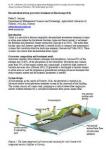
JENSSEN, P. (2005): Decentralized Urban Greywater Treatment at Klosterenga Oslo. Entradas: Ecological Engineering-Bridging between Ecology and Civil Engineering: , 84-86. URL [Visita: 21.02.2012]This websites elaborates on the structure of a rapid sand filter. Varied information on technical issues is presented in detail.