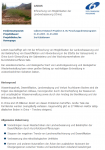
This presentation on the implementation of sewage fertilized short rotation plantations in developing countries gives an overview on the main principles, technology details and examples of successfully implemented SRPs, including many pictures and photographs.
HAENEL, M. (n.y): Sustainable and safe application of sludge and wastewater in Short-Rotation-Plantation. Bremerhaven: Technologie-Transfer-Zentrum Bremerhaven (ttz) URL [Visita: 21.04.2012]Library

This special issue of "Sanitation Now", a magazine on the global sanitation crisis published by the Stockholm Environment Institute, focuses on the millions of dollars that are lost through the lack of sanitation - such as costs caused through polluted water, diarrhoea related diseases and deaths, and losses in tourist income. Its baseline is that poor sanitation equals more poverty and a stunted economic growth.
SEI (2008): Sanitation Now Money down the drain. Stockholm: Stockholm Environment Institute URL [Visita: 21.04.2012]This thematic background paper for the International Conference on Freshwater in Bonn in December 2001 is a collection and analysis of relevant information on pressures, state and responses of both groundwater and surface water pollution with special emphasis given to regional conditions, frames and problems. To point out success stories and lessons learnt, case studies have been selected.
KRAEMER, A. CHOUDHURY, K. KAMPA, E. (2001): Protecting Water Resources: Pollution Prevention. (= Thematic Background Paper ). International Conference on Freshwater in Bonn URL [Visita: 21.04.2012]The Vision 2030 study aims to increase our understanding of how anticipated climate change may affect drinking water and sanitation systems and what can be done to optimize resilience of infrastructure and services.
WHO (2009): Summary and policy implications Vision 2030: the resilience of water supply and sanitation in the face of climate change. Geneva: World Health Organisation (WHO) URL [Visita: 21.04.2012]The vision document of the sustainable sanitation alliance explains the notion of sustainable sanitation in detail.
SUSANA (2008): Towards more Sustainable Sanitation Solutions. (= Version 1 ). Eschborn: Sustainable Sanitation Alliance (SuSanA) URL [Visita: 21.04.2012]This chapter discusses the potential of organic farming for contributing to sustainable development, mainly in low-income countries, by integrating urban settlements with rural communities, through the recycling of domestic and household waste.
REFSGAARD, K. JENSSEN, P.D. MAGID, J. (2005): Possibilities for Closing the Urban-rural Nutrient Cycles. Entradas: HALBERG, N. ; ALROE, H.F. ; KNUDSEN, M.T. ; KRISTENSEN, E.S. (2005): Global Development of Organic Agriculture: Challenges and Prospects. Oxfordshire: . URL [Visita: 21.04.2012]This study deals with the impacts of municipal effluent (ME) irrigation on soil physicochemical properties and its remediation by tree species with a view on utilizing this resource in growing woodlot, controlling land degradation and improving environmental quality in suburban areas.
SINGH, G. ; BHATI, M. ; RATHOD, T. (2010): Use of Tree Seedlings for the Phytoremediation of a Municipal Effluent Used in Dry Areas of North-Western India. Plant Growth and Nutrient Uptake. Entradas: Ecological Engineering : Volume 36 , 1299-1306. URL [Visita: 20.04.2012]A factsheet covering the history, types, advantages and disadvantages of tidal power.
VORWEG GEHEN GROUP (2012): Fact sheet – Tidal Power. Essen: RWE Power Renewables. [Accessed: 20.04.2012] PDFThe present study estimates above-ground biomass and net primary productivity in high density (‘energy’) plantations of three important species raised at Hisar (29 °10′N, 75 °46′E, 215 m.a.s.l.) in arid India.
SINGH, V. ; TOKY, O.P. (1995): Biomass and Net Primary Productivity in Leucaena, Acacia and Eucalyptus, Short Rotation, High Density (Energy) Plantations in Arid India. Entradas: Journal of Arid Environments: Volume 31 , 301-309. URL [Visita: 20.04.2012]This study mainly aimed to investigate the bioproductivity and nutrient cycling processes in plantation forests of bamboo and acacia. In India, multipurpose tree (MPT) species are extensively planted to meet the increasing demand for fuel and industrial wood.
SHANMUGHAVEL, P. ; FRANCIS, K. (2001): Bioproductivity and Nutrient Cycling in Bamboo and Acacia Plantation Forests. Entradas: Bioresource Technology: Volume 80 , 45-48. URL [Visita: 20.04.2012]Article about LADAS, a project, which aims to investigate possibilities for land amelioration, and for combating desertification and migration into cities in the Gansu province in China, by testing the salt resistance and growth behaviour of the Short-Rotation-Plant Salix.
LADAS (2005): Erforschung von Moeglichkeiten der Landverbesserung (China). Bremerhaven: ttz Bremerhaven URL [Visita: 20.04.2012]Article on a short rotation plantation trial in Berlin, Germany.
HECKER, S. (2012): Forschung zu Kurzumtriebsplantagen und Abwassernutzung in Praxis umgesetzt. Leibniz: Zentrum fuer Agrarlandschaftsforschung (ZALF) e.V. URL [Visita: 20.04.2012]Language: German
Many conditions may trigger conflicts, including jurisdictional ambiguities, miscommunication, and competition between sectors and users. This article describes how population growth and migration in Tanzania’s Pangani River basin—arguably the most waterstressed basin in the country—have intensified local water conflicts. Resolving these conflicts requires understanding the socio-cultural context of the local communities and increasing stakeholder involvement in water management.
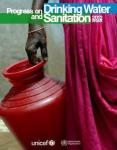
MBONILE, M.J. (2005): Population, Migration, and Water Conflicts in the Pangani River Basin, Tanzania. Entradas: REPORT FROM AFRICA: Population, Health, Environment, and Conflict: Volume 12 , 20-28. URL [Visita: 19.04.2012]There are still 780 million people without access to an improved drinking water source. And even though 1.8 billion people have gained access to improved sanitation since 1990, the world remains off track for the sanitation target. It is essential to accelerate progress in the remaining time before the MDG deadline, and I commend those who are participating in the Sustainable Sanitation: Five Year Drive to 2015. This report outlines the challenges that remain. Some regions, particularly sub- Saharan Africa, are lagging behind. Many rural dwellers and the poor often miss out on improvements to drinking water and sanitation. And the burden of poor water supply falls most heavily on girls and women. Reducing these disparities must be a priority.
UNICEF ; WHO (2012): Progress on Drinking Water and Sanitation. Update 2012. New York/Geneva: United Nations International Children’s Emergency Fund (UNICEF)/World Health Organisation (WHO) URL [Visita: 19.04.2012]Soil erosion is a natural process accelerated by human activities. Each year, erosion of surface soil from river basins amounts to 60 billion tons, resulting in 24 billion tons of sediment flux to the oceans and almost 25 billion tons of soil lost from agricultural land. From a global point of view, this represents a redistribution of soil resources by about 7 per cent each decade with multiple consequences. Much of this sediment moves into river systems, posing many problems for river management and control. By assimilating nutrients and contaminants, sediment has serious implications both in rivers and coastal waters.
ZHIDE, Z. YULING, T. (n.y): Sediment in Rivers –Origin and Challenges. Beijing: The International Research and Training Center on Erosion and Sedimentation URL [Visita: 19.04.2012] PDF