Johnson introduces the "Special Issue" increasing the evidence-base for informed, effective and collaborative research strategies in the North.
JOHNSON, R.M. (2012): Addressing challenges in participatory research partnerships in the North. opening a conversation. Entradas: International Journal of Circumpolar Health: Volume 71 URL [Visita: 02.08.2018] PDFLibrary
This online article summarizes the study of NEWTON, R. J. et al., 2015: Sewage Reflects the Microbiomes of Human Populations, In: mBio, Vol. 6 (2).
PENNISIS, E. (2015): Pollution, Human Health tracked with Sewage Microbes. Science Online URL [Visita: 02.08.2018]In this review, the authors highlight relevant data and describe an initiative through the Arctic Council’s Sustainable Development Working Group to characterize the extent of WASH services in Arctic nations, the related health indicators and climate-related vulnerabilities to WASH services. With this as a baseline, efforts to build collaborations across the Arctic will be undertaken to promote innovations that can extend the benefits of water and sanitation services to all residents.
HENNESSY, T.W. and BRESSLER, J.M. (2016): Improving health in the Arctic region through safe and affordable access to household running water and sewer services. an Arctic Council initiative. International Journal of Circumpolar Health URL [Visita: 02.08.2018] PDFPresentation held by Wayne Parker, Civil and Environmental Engineering, University of Waterloo, Ontario.
The sewage epidemiology approach was applied to a one-year sampling campaign in the largest wastewater treatment plant (WWTP) in Belgium to estimate the consumption of illicit drugs (e.g. cocaine). This manuscript shows that sewage epidemiology provides consistent and logical results and that it is a promising tool that can be used in addition to classical studies to estimate illicit drug use in populations.
VAN NUIJS, A. L.N. et al. (2011): Sewage Epidemiology — A real-time Approach to estimate the Consumption of illicit Drugs in Brussels, Belgium. Entradas: Environment International: Volume 37 , 612-621. URL [Visita: 02.08.2018]This policy summary refers to the most recent AMAP assessment which looks at a wide range of chemicals newly and recently detected in Arctic ecosystems. These ‘chemicals of emerging Arctic concern’ should be considered potential candidates for future research or monitoring and possibly for consideration under relevant global and/or regional regulations. In addition, these chemicals of emerging concern contribute to an even broader understanding of how Arctic pollution is changing.
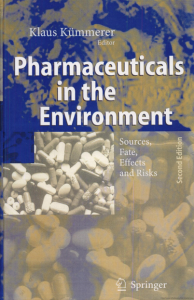
This book addresses the most important issues in the field of pharmaceuticals in the environment for the near future. Typical examples and abundant data are presented.
KUEMMERER, K. (2004): Pharmaceutcals in the Environment: Sources, Fate, Effects and Risks - second Edition. Springer Berlin Heidelberg URL [Visita: 02.08.2018]When people take drugs, they end up in the water, either unchanged or broken down into specific metabolites. Increasingly, water can be tested to gauge how much drug use is going on in an area, and a new study shows that the level of illegal drugs being used in a community can be tested in real time, and potentially applied to help police narcotic use.
MAIN, D. (2014): Real-time Wastewater Analysis shows what drugs are being used where. Popular Science URL [Visita: 02.08.2018]Se describen contextos especficos en México, las tecnologias relacionadas a la energía, agua, vegetación y vivienda y casos de implementación en comunidades rurales.
CERVANTES. E., SEGURA, I. VAZQUEZ, S., GARCIA, L. y FALCÓN, A. (2017): Tecnologías apropiadas para el acceso sostenible al agua en el medio rural marginado. Morelos (México): Instituto Mexicano de Tecnología del Agua (IMTA) URL [Visita: 01.08.2018] PDFGWPP`s mission is to be a knowledge resource and hub on water pathogens which will guide the goals for sanitation and achieving safe water around the world using the power of new information technology and tools. The glossary contains relevant terms: see here http://www.waterpathogens.org/glossary
The Circumpolar Health Research Network (CHRN) was formed in 2012 with the coming together of two international circumpolar health organizations — the International Network for Circumpolar Health Research (INCHR) and the International Association of Circumpolar Health Publishers (IACHP).
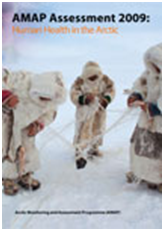
This assessment report details the results of the 2009 AMAP assessment of Human Health in the Arctic. It builds upon the previous AMAP human health assessments that were presented in 19981 and 2022.
The Arctic Monitoring and Assessment Programme (AMAP) is a group working under the Arctic Council.
The research underpinning this work took place in the context of two rural water and sanitation projects carried out in the Eastern Region of Ghana. The focus of study was on the way engineers can make water and sanitation projects more sustainable. In particular, emphasis was placed on the broad range of non-technical factors engineers need to incorporate into the design of water and sanitation systems and the processes they need to follow in order to achieve this, looking specifically at the implications of community participation for design process, project management and health and safety management.
The perception of social sanitation norms (PSSNs) around unacceptability of open defecation has been a key aspect of recent sanitation interventions. However, underlying mechanisms through which "reconstructed" PSSNs affect sanitation outcomes have been a black box. This explorative cross-sectional study examines direct and indirect links between PSSNs and sanitation safety using data from structured interviews and observations in 368 households in rural South Ethiopia.
NOVOTNY, J. et al. (2017): The Role of Perceived Social Norms in Rural Sanitation: An Explorative Study from Infrastructure-Restricted Settings of South Ethiopia. Entradas: International Journal of Environmental Research and Public Health: Volume 14 URL [Visita: 25.07.2018] PDFThe article introduces design thinking as concept and provides case studies on how the design methodology has been applied in practice.
BROWN, T. and WYATT, J. (2010): Design Thinking for Social Innovation. URL [Visita: 23.07.2018]